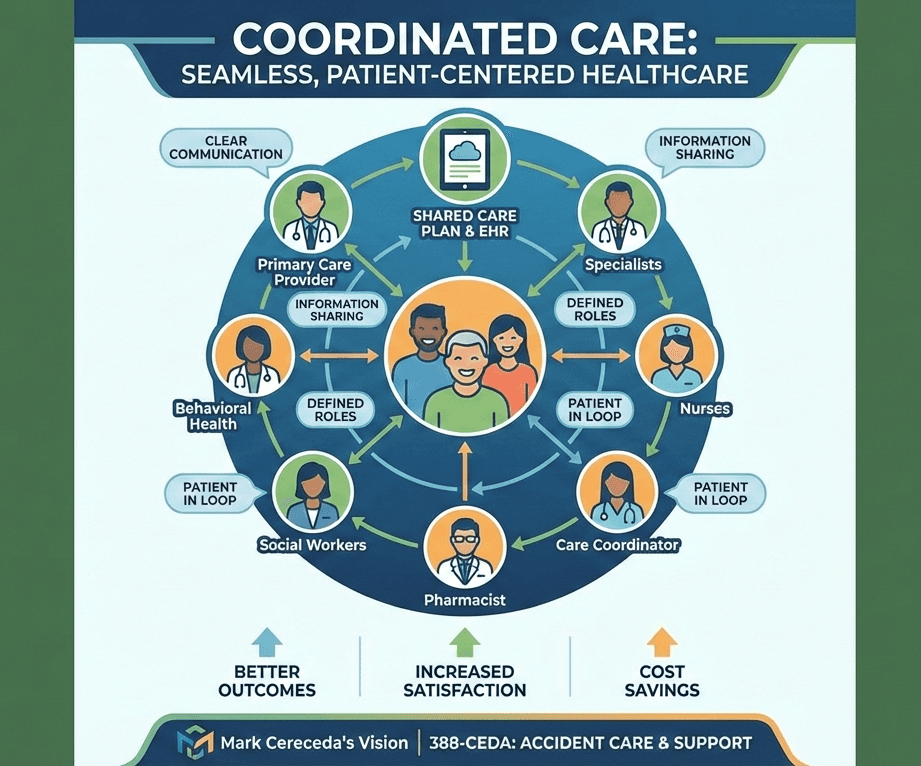
Throughout Mark Cereceda's career, he aimed to provide patients with comprehensive care, ensuring a seamless process from the moment they scheduled an appointment through completion of treatment and beyond. He believed every person involved in a person's care should be in the loop, providing the best treatments without the patient needing to re-explain symptoms. Cereceda recognized the importance of a coordinated care team model in this approach.
But what is coordinated care, and how does it look in modern medical settings? This article will explain what it involves and how practitioners can build one in their clinic.
What is Coordinated Care?
Coordinated care ensures a patient's needs are addressed at every step of the treatment process. It requires:
• All providers sharing information, including medical records, history, and test results
• Clear communication within the office and to other providers who may be assisting with treatment
• A central care plan that reflects the patient's health needs and goals
This approach offers superior care, reduces errors, increases efficiency, and improves patient satisfaction and outcomes.
How to Create a Coordinated Care Team Model
Creating a coordinated care team model requires the following steps:
• Understanding Goals: Everyone on the team must understand the patient's health goals and use that information to create a care plan accessible to all involved parties.
• Defined Roles: Each team member should understand their roles and responsibilities in providing care, minimizing duplication, and supporting efficiency.
• Structured Communication: Teams must define the best communication methods, whether direct messaging, shared online workspaces, regular group meetings, or a combination of all three. This ensures critical information gets to the right parties.
• Keep Patients and Families in the Loop: Patients and families should be apprised of all updates and changes in care, educated about relevant health conditions, and included in decision-making processes to optimize satisfaction and comfort.
• Focus on Hot Spots: Teams should be especially aware of updates in care, including hospital admissions and discharges, medication changes, new diagnoses, and social crises. Ensure all staff receive communication regarding these changes as they are imperative to the care approach.
Who Is Included in a Coordinated Care Team?
Coordinated care typically involves an interdisciplinary care team. The leading provider is ultimately responsible for ensuring everyone receives necessary and timely information regarding treatment and medical approaches. The team typically includes:
• The primary care provider oversees care
• The care coordinator assists with appointments and follow-ups and helps maintain communication among team members
• Nurses may be responsible for medication management, patient coaching, and symptom monitoring
• A behavioral health clinician manages mental health and substance abuse issues
• Pharmacists review medications for possible interactions and duplications, and to ensure compliance
• Social workers address social determinants that may impact healthcare, such as housing, food security, benefits, transportation, safety, and family dynamics
• Specialists such as cardiologists, endocrinologists, oncologists, etc., may be brought in to provide more comprehensive care
• Patients and Caregivers should be included in all medical updates and decision-making processes
Care Coordination Best Practices
So far, we have outlined the general guidelines for developing a coordinated care team, but the following practices will ensure seamless processes that lead to a successful approach.
Map Out Workflows to Identify Pain Points
Create a map outlining patient care from start to finish, focusing on specific segments, such as how they may navigate a single-day exam or a home-to-hospital-to-home transition. Identify obstacles and bottlenecks. Determine ways to develop smoother processes for optimized care.
Measure Outcomes and Make Improvements
Coordinated care isn't a set-it-and-forget-it system. You must constantly revisit it, measuring outcomes such as readmission rates, ER visits, patient satisfaction, no-show rates, and patient health outcomes. Ideally, your team will show steady improvement. However, if you are slipping backward, you may need to refine your approach.
Start Small and Scale
Developing a coordinated care team does not happen overnight. It should be integrated slowly, and errors will arise. To minimize negative impact, it's best to start with a pilot group of 25-50 high-risk patients.
Continue refining the workflow and communication and document your experiences. Once you achieve high success rates, you can begin rolling out your program to more patients.
The Benefits of Coordinated Care
Coordinated care offers benefits for both clinics and patients. It provides:
• Better Patient Outcomes: A 2025 study reveals coordinated care can lead to better patient outcomes after 6 months.
• Cost Savings: An evaluation of the Johns Hopkins Community Health Partnership showed that integrating acute care interventions into coordinated care can save patients up to $4295 per episode.
• Increased Satisfaction: 2020 research found that coordinated care improved relationships between patients and providers, leading to higher customer satisfaction.
388 Ceda is the Final Step in Coordinated Care
Mark Cereceda believed in coordinated care, and he took it one step further by founding 388-CEDA. The company provides accident care for personal injury patients, including insurance help, medical treatment, and ongoing case support. Reach out to learn how we can help you during a difficult time.
FAQs
How is coordinated care different from traditional care?
In traditional care, team members often work in silos, with limited communication and separate plans. Coordinated care emphasizes shared information and a central care plan, ensuring a seamless process and better health outcomes.
How does technology support a coordinated care team?
Shared electronic health records (EHRs), workspace platforms, and care management tools allow providers to view the same information, update care plans, exchange secure messages, and track tasks and outcomes to provide coordinated care.
What challenges can arise when building a coordinated care team?
Common challenges in building a coordinated care team include unclear accountability, poor communication, siloed departments, and a lack of supportive systems and technology. These issues can be addressed with effective leadership and training, and system-level changes that break down siloes.
Can coordinated care work across different organizations and settings?
Yes, coordinated care is designed to work across different organizations and settings, including primary care facilities, hospitals, rehabs, home care agencies, specialty groups, and community services.